

Why Website Speed Matters
The short version
- Visitors leave slow sites before they finish loading, and most of them never come back.
- A one second delay is enough to cost conversions. It is one of the few things that hurts both rankings and revenue at once.
- Search engines treat speed as a ranking signal, so slow pages lose twice over.
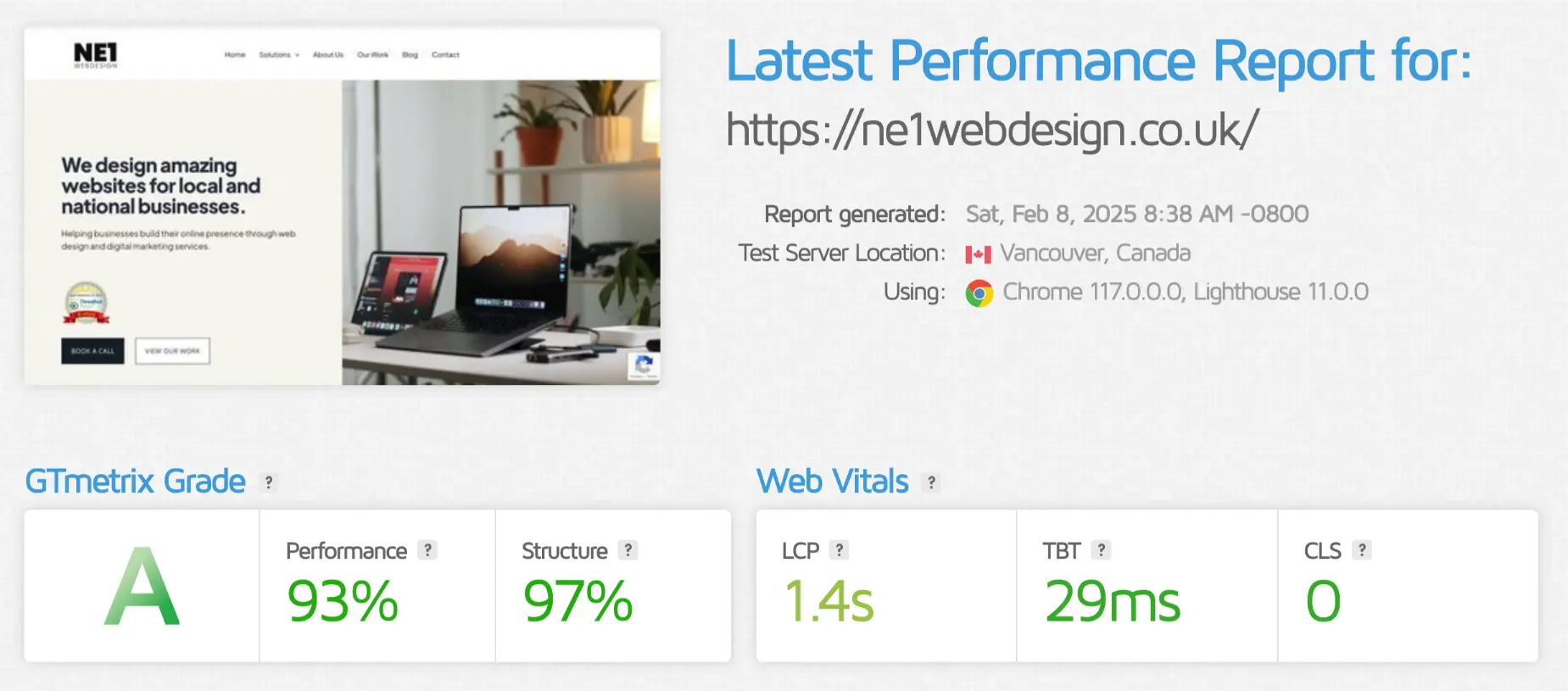
- Our own site scores an A on GTmetrix, which is the standard we build client sites to rather than just talking about it.
Why Website Speed Matters
(And how we achieved an ‘A’ GT Metrix score)
Website speed is massively important.
Visitors expect websites to load quickly, and if they don’t, they’ll often leave before the page finishes loading. In fact, even a one-second delay can impact your bottom line, reducing conversions and frustrating potential customers. Search engines also prioritise fast websites, making performance critical for visibility, SEO and user experience alike.
At NE1 Web Design & SEO, we understand how important speed is, and we don’t just apply this to our clients’ websites, we’ve ensured our own site is running at peak performance. Our latest GTmetrix report shows just how far we’ve gone, achieving an A grade with near-perfect metrics.
The Numbers Behind the Score
GTmetrix Grade: A (Performance: 93%, Structure: 97%)
Key Metrics:
Largest Content Paint (LCP): 1.4 seconds
Total Blocking Time (TBT): 29 milliseconds
Cumulative Layout Shift (CLS): 0
So, how did we get there?
Here’s a breakdown of the strategies we used.
1. Smarter Image Handling
Images are often the biggest contributors to slow websites. We optimised all of our images by resizing them for web, compressing them without losing quality, and using modern formats like WebP for faster loading.
2. Streamlined Code
By minimising our CSS and JavaScript, and only loading the scripts that were absolutely necessary, we reduced page bloat. We also implemented asynchronous loading, ensuring the most important parts of the site load first.
3. High-Performance Hosting
A fast website starts with a reliable foundation. We host our site on a high-performance server, complete with caching and advanced configuration for faster response times, with a 99.9% uptime guarantee.
4. Using a CDN
To make our site equally fast for visitors no matter where they’re located, we employed a content delivery network (CDN). This ensures our website is served from the closest available server to each user.
5. Core Web Vitals Optimisation
Google’s Core Web Vitals focus on three key areas: loading speed, interactivity, and visual stability. We optimised for all three, ensuring our LCP, TBT, and CLS metrics exceeded Google’s standards.
How This Applies to Your Business
Slow websites lose visitors, customers, and revenue. We don’t just build beautiful websites, we build fast ones that help businesses thrive. Whether you’re looking to improve your existing site or start from scratch, we’re here to help.
Want a straight answer on your own site?
A free, no obligation look at what is holding it back, in plain English with the quick wins first.

Michael James
Michael heads up NE1 Web Design & SEO in North Shields and has been building websites for more than twenty years.